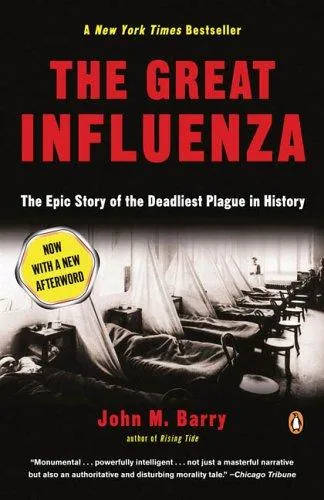
Barry's history of the 1918 influenza that killed fifty million people is also a history of American public health, medical science, and wartime propaganda. The decision to suppress news of the pandemic to maintain morale killed more people than the virus alone could have. A book that reads like prophecy and arrived in paperback just in time to be ignored again.
Pandemic: Disease, Silence & the Failure of Institutions
The Invisible Enemy — dispatches from inside epidemics and the systems that failed to contain them. These books are about the biology of contagion and the politics of denial — the viruses that jumped species, the governments that looked away, and the scientists who saw what was coming and could not make anyone listen.
This page contains affiliate links. If you buy a book through one of these links, we earn a small commission at no extra cost to you. Full disclosure →
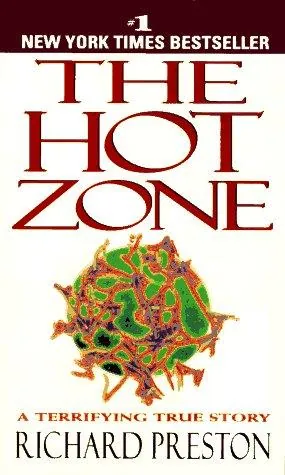
The Hot Zone
Richard Preston
Preston reconstructs the arrival of Ebola in a suburban Virginia monkey house with the pace of a thriller and the authority of a virologist's nightmare. What the virus does to the human body is described with a precision that is not gratuitous but necessary — you need to understand the mechanism to understand the terror. The most frightening thing is how easily containment was nearly not achieved.
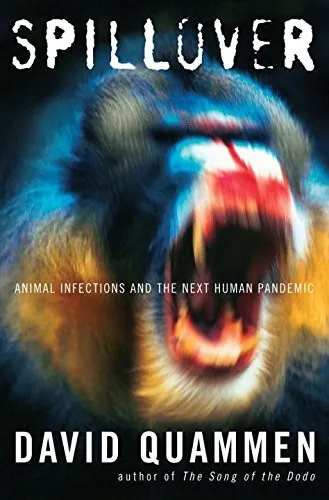
Spillover: Animal Infections and the Next Human Pandemic
David Quammen
Written eight years before COVID-19, Quammen's investigation of zoonotic diseases reads as meticulous prophecy. He tracks the spillover points where animal viruses cross into human populations — from bats in China, from gorillas in Congo — with the narrative skill of a novelist and the rigour of a scientist. The book's final section on coronaviruses is now one of the most haunting paragraphs in nonfiction.
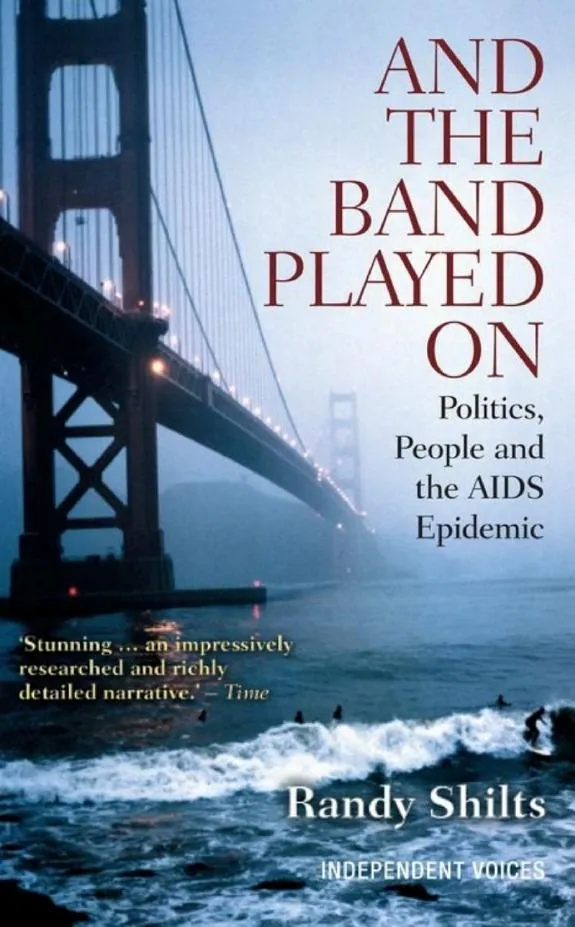
Shilts documented the AIDS crisis in real time — the deaths, the silence of the Reagan administration, the scientific battles, the gay community torn between activism and denial. He was HIV-positive while writing it and refused to be tested until he finished, afraid knowledge would affect the work. The book is a masterpiece of journalism and a monument to everyone who died while politicians looked away.
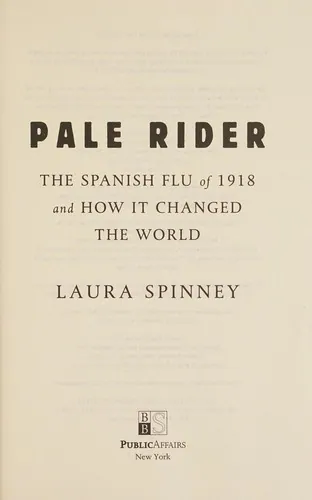
Spinney's global account of 1918 moves from Alaska to South Africa to Samoa, insisting that the pandemic be understood at full planetary scale. Fifty million dead — more than the Great War — yet the cultural memory refused to consolidate it. She is interested in why: how societies forget collective catastrophe and what that forgetting costs. Written in 2017. Read now with different eyes.
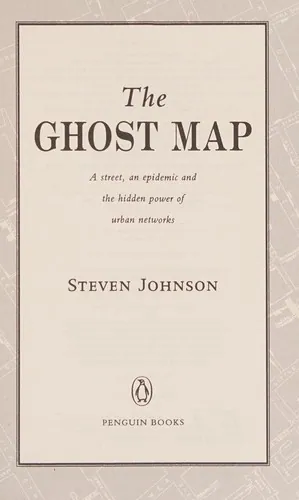
Johnson reconstructs the 1854 Soho cholera outbreak and the two men — a doctor and a minister — who solved it by mapping the dead. The story of John Snow and the Broad Street pump is usually told as a simple triumph of empiricism over superstition, but Johnson finds the complexity: the resistance, the competing theories, the city that was killing its own inhabitants and blaming bad air.
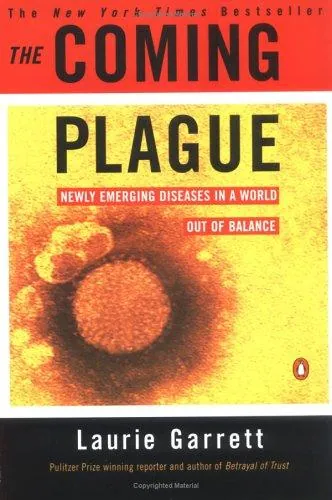
Garrett's nine-hundred-page prophecy from 1994 catalogues the conditions being manufactured for pandemic: deforestation, poverty, antibiotic overuse, the collapse of public health infrastructure. She visited every outbreak she could reach. The science is impeccable and the warning is explicit. The book was praised, shortlisted, and ignored by every government that should have acted on it.
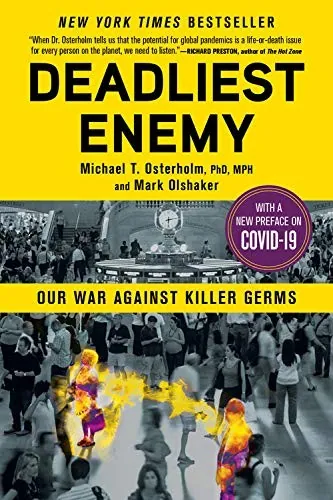
Deadliest Enemy: Our War Against Killer Germs
Michael T. Osterholm and Mark Olshaker
Osterholm spent a career as America's most persistent pandemic Cassandra and this is his account of the fight — the influenza strains being tracked, the vaccine shortfalls, the national stockpile that was never adequate. Written as warning, read now as diagnosis. The chapter on pandemic preparedness gaps is a clinical autopsy of every decision not made before 2020.
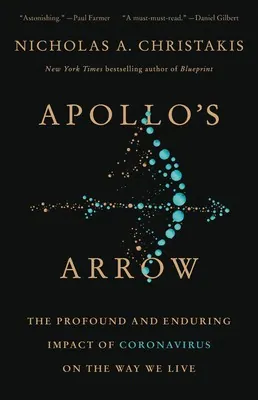
Apollo's Arrow: The Profound and Enduring Impact of Coronavirus on the Way We Live
Nicholas A. Christakis
Christakis wrote this in the first year of COVID-19 and the speed does not damage the depth — he draws on network science, epidemiology, and social history to argue that pandemics are not interruptions to society but revelations of it. What broke was already broken. What held had been quietly maintained. A work of real-time social science that will endure as a document of a civilisation at its limits.
The Plague Year: America in the Time of Covid
Lawrence Wright
Wright's dispatches from inside the first year of the American pandemic are at once immediate and damning. The intelligence failures, the supply chain collapses, the political decisions made in defiance of the science — all documented with the precision of his earlier work on al-Qaeda and Scientology. The toll is in the numbers, but Wright ensures the dead are more than statistics. They are specific people who did not have to die.
Related Lists
Natural Disasters & the World We Built to Fail
The Earth Doesn't Care — accounts of hurricanes, floods, heat, and rising seas that expose not nature's indifference but our own. Every disaster in these books has a human dimension: who was warned, who was abandoned, and who decided the cost of prevention was too high.
Medical Malpractice & the Limits of Care
The Body Under the System — accounts of what happens when medicine fails: the fraudulent technology, the addictive drugs, the cultural incomprehension, the corporate corruption. These books examine healthcare not as a calling but as an institution — one with its own incentives, its own blind spots, and its own capacity for harm.
Environmental Destruction & the World We Are Ending
The Long Emergency — accounts of ecological collapse, climate catastrophe, and the systematic destruction of the natural world. These books document what was lost, what is being lost now, and the political and industrial forces that chose to make it happen.
Monthly Tragic Picks
One email a month. Hand-picked books guaranteed to wreck you emotionally. No spam, no filler.