← All Lists

Extremism and Radicalization — How Ordinary People Find Certainty

Books that trace the path from grievance to fanaticism — the cults, the movements, the ordinary people who joined them.

10 books 3.8 avg devastation non-fiction

This page contains affiliate links. If you buy a book through one of these links, we earn a small commission at no extra cost to you. Full disclosure →

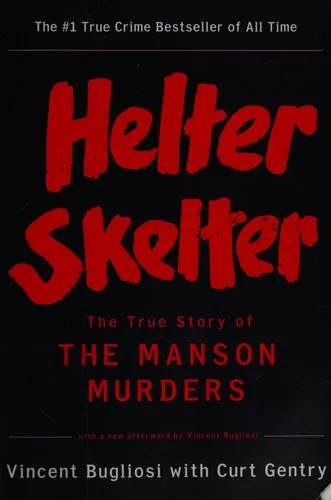
Helter Skelter

Vincent Bugliosi

Emotionally Ruined

Bugliosi prosecuted Charles Manson and then wrote the definitive account of the case. The horror is not the murders but the mechanism — the complete subordination of individual will that Manson achieved through love bombing, isolation, and repetition. The Family is a case study in how ordinary people become capable of anything.

true crime Manson cults murder
Existential Dread

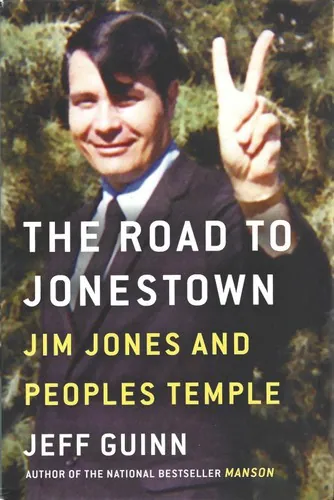
Guinn traces Jim Jones from his Indiana childhood through the church's progressive idealism to Guyana and the murder of 918 people. What the book refuses to do is make Jonestown simply the story of a madman. The People's Temple was a genuine civil rights organisation. The people who followed Jones were not fools — they were idealists who trusted a man who was destroying himself. That is the real horror.

cult Jonestown history America

Columbine

Dave Cullen

Existential Dread

Cullen spent ten years reporting this and what he found is that almost everything everyone knew about Columbine was wrong. The myths are myths. What is true is worse: two boys, one psychopathic, one suicidal, for whom the school was not the real target.

school shooting true crime psychology America
Lingering Melancholy

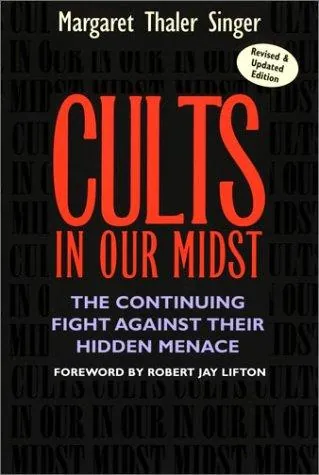
Singer spent decades as a psychologist studying cult recruitment and the mechanisms of thought reform. Her book is a clinical taxonomy of manipulation — the techniques for isolating members, redefining language, manufacturing guilt. Less memoir than manual: the value is in the precision of the description, the way she makes the invisible architecture of control visible. An essential counter to the assumption that only the weak are recruited.

cult psychology manipulation society
Emotionally Ruined

Musser was the nineteenth wife of the FLDS prophet Rulon Jeffs, married at eighteen, and eventually escaped to testify against Warren Jeffs. She writes about a world sealed from outside reality by design — where obedience was spiritual currency and questioning was sin. The courage required to become a witness is documented in language as careful as legal testimony, which is itself a kind of testimony.

cult FLDS women memoir
Ugly Crying

Phelps-Roper was born into the family that made the Westboro Baptist Church, picketed soldiers' funerals, held 'God Hates Fags' signs at the age of five. She left because of arguments she had on Twitter. The memoir traces the logic of indoctrination and the fragility of certainty with a generosity toward her own family that is itself a form of courage. The most reasonable book about unreasonable belief.

cult religion memoir family
Ugly Crying

Remini spent thirty years in Scientology and left after asking questions about David Miscavige's wife — questions the Church declared suppressive. Her account of what Scientology does to doubt — the interrogations, the disconnection from family, the escalating financial demands — is written in the voice of someone who is still angry and is right to be. She then made a television series. The anger did not diminish. It multiplied.

cult Scientology memoir Hollywood
Ugly Crying

Esther grew up in a high-control religious group founded by her grandfather — physical discipline enforced as theology, isolation from the outside world maintained as holiness. She writes about deconstructing a faith that was identical with her earliest sense of self. The difficulty is that leaving the cult meant leaving everything she had ever loved. That is what makes it a grief memoir as much as a survival one.

cult religion memoir faith
Existential Dread

Wariner was the thirty-ninth of Joel LeBaron's forty-two children, raised in a polygamous Mormon fundamentalist colony in Mexico after her father's murder. What she writes about is not ideology but the daily texture of neglect — the hunger, the absent mothers stretched between too many children, the stepfather's abuse that the doctrine made possible. A childhood reconstructed with heartbreaking exactitude.

cult FLDS childhood memoir

Educated

Tara Westover

Emotionally Ruined

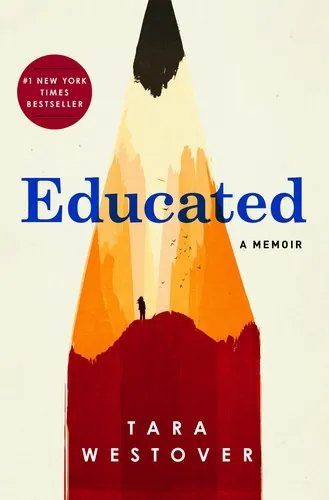
Westover grows up in a survivalist Idaho family — a kind of private cult — and educates herself out of it. The memoir is about the violence of certainty: her father's apocalyptic faith, her brother's physical abuse, the family's collectively enforced denial. Education is not just school. It is the capacity to know what you are inside.

trauma family survival loss

Monthly Tragic Picks

One email a month. Hand-picked books guaranteed to wreck you emotionally. No spam, no filler.