← All Lists

Survival at the Edge — When Nature Decides

Books about humans pushed past every limit — sea, ice, mountain, desert — and what survival costs.

10 books 3.9 avg devastation non-fiction

This page contains affiliate links. If you buy a book through one of these links, we earn a small commission at no extra cost to you. Full disclosure →

In the Heart of the Sea

Nathaniel Philbrick

Existential Dread

The Essex was stove in by a sperm whale in 1820 and the crew spent ninety days in open boats before rescue. Philbrick reconstructs what happened during those ninety days. What kept some men alive is the horror of the book's final third. Melville knew; we have been careful about what we remember.

sea survival cannibalism history

The Perfect Storm

Sebastian Junger

Emotionally Ruined

Six men on the Andrea Gail died in the Halloween Gale of 1991. Junger constructs their deaths from sea charts and testimony of everyone who did not die. The boats that survived by not going out haunt the book as much as the one that did not come back.

sea storm fishing death

Endurance

Alfred Lansing

Ugly Crying

Shackleton's Antarctic expedition lost its ship and spent twenty-two months keeping every man alive through a sequence of improvisations that should not have worked. Lansing reconstructs it from diaries and interviews. The ending is the most unlikely happy ending in exploration history, which makes it more devastating than a tragedy.

Antarctica survival endurance exploration

The Great Alone

Kristin Hannah

Emotionally Ruined

A Vietnam vet takes his family to Alaska and the isolation that heals him also kills him — the darkness arriving with the winter and the violence escalating with it. Hannah traces the geography of domestic abuse: the beauty outside and the terror inside, the love that cannot save anyone from the damage.

Alaska PTSD domestic abuse survival
Existential Dread

Ward gives you twelve days in Bois Sauvage, Mississippi before Hurricane Katrina — a Black family, a litter of puppies, a teenage girl's pregnancy, and the slow approach of disaster. The storm is also poverty, also race, also the government's relationship to Black bodies. Nothing is salvaged without cost.

race hurricane poverty Mississippi
Emotionally Ruined

On August 1, 2008, eleven climbers died on K2 in a single day. Zuckerman and Padoan reconstruct the disaster through the eyes of the Sherpa who survived — workers largely invisible in the heroic narratives Western climbers tell about themselves. The mountain killed without distinction, but the story of who was there and why is a story about the economics of risk and the hierarchy of whose death gets mourned.

industrial disaster mountaineering Nepal risk
Ugly Crying

Seismologist Jones moves from Pompeii to the Tohoku tsunami, asking not what disasters do to infrastructure but what they do to civilisations — to their mythologies, their politics, their sense of fate. The geological facts are never in doubt. What she reveals is that disasters amplify whatever a society already is: its cracks, its injustices, its capacity for delusion.

natural disaster earthquake history geology

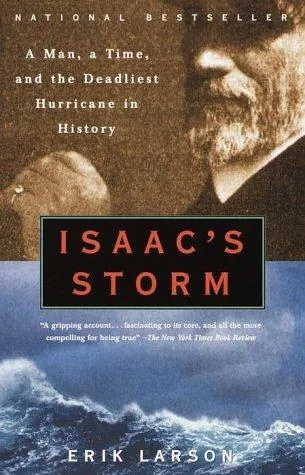
Isaac's Storm

Erik Larson

Emotionally Ruined

The hurricane that destroyed Galveston in 1900 killed six thousand people and Larson reconstructs it around the meteorologist who failed to see it coming. The hubris is American, the disaster is biblical, the dead are given back their faces. Larson's gift is making the archive breathe. You know how it ends before the first page and it destroys you anyway.

natural disaster hurricane history America

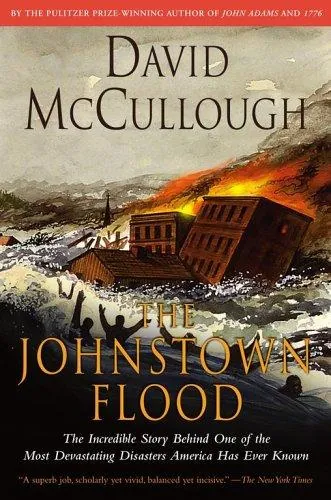
The Johnstown Flood

David McCullough

Emotionally Ruined

A dam owned by Pittsburgh's wealthiest club broke in 1889 and killed over two thousand people downstream. McCullough tells it with the architectural precision he brought to all his best work — the dam's engineering failures, the negligence, the twenty million tons of water. The class dimension is inescapable: the rich maintained their fishing retreat; the poor were buried in mud.

natural disaster flood history class
Ugly Crying

Winchester follows the 1883 eruption that was heard three thousand miles away and killed thirty-six thousand people, then widens the frame to encompass plate tectonics, colonial politics, and the birth of global news. The eruption is almost a climax to a book that is really about the connected world's first shared catastrophe. Geology as world history. Devastation at planetary scale.

natural disaster volcano history geology

Monthly Tragic Picks

One email a month. Hand-picked books guaranteed to wreck you emotionally. No spam, no filler.